About Us:
Our Story, Our Legacy, Our Vision
In October 2024, something historic happened: the Episcopal Diocese of Eastern Michigan and the Episcopal Diocese of Western Michigan came together (junctured is the technical term!) to form the Episcopal Diocese of the Great Lakes. It was a moment of reimagining, of bringing together communities, traditions, and deep roots—and with it came an extraordinary opportunity to strengthen our camping ministry.
For decades, two remarkable camps operated separately, each carrying its own legacy and serving Episcopalians across Michigan with grace, joy, and transformative summer experiences. Now, as one diocese, we've brought them together under one umbrella: Great Lakes Episcopal Camping & Retreats.
Our Legacies
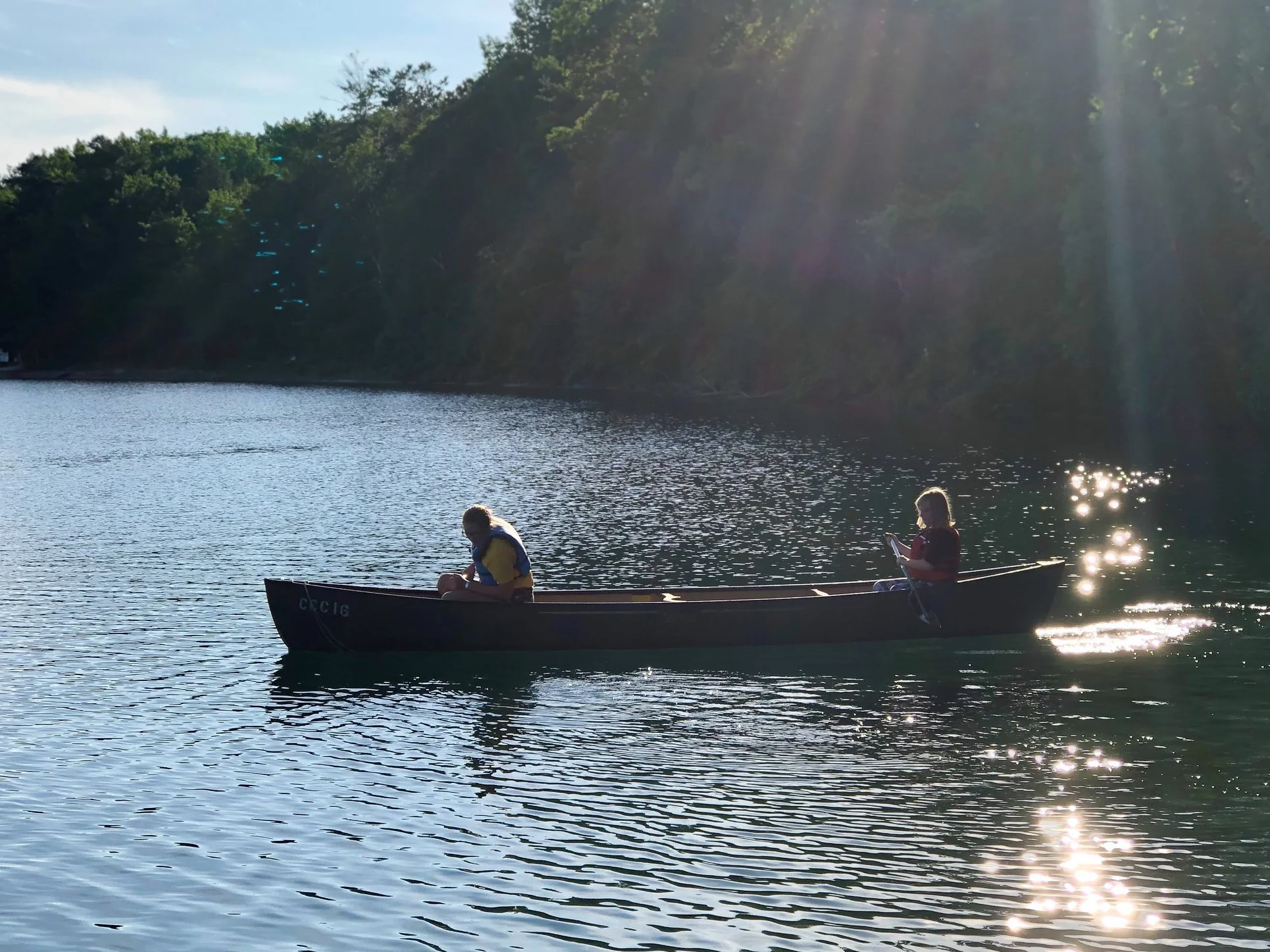
Youth Camp at Camp Chickagami
-
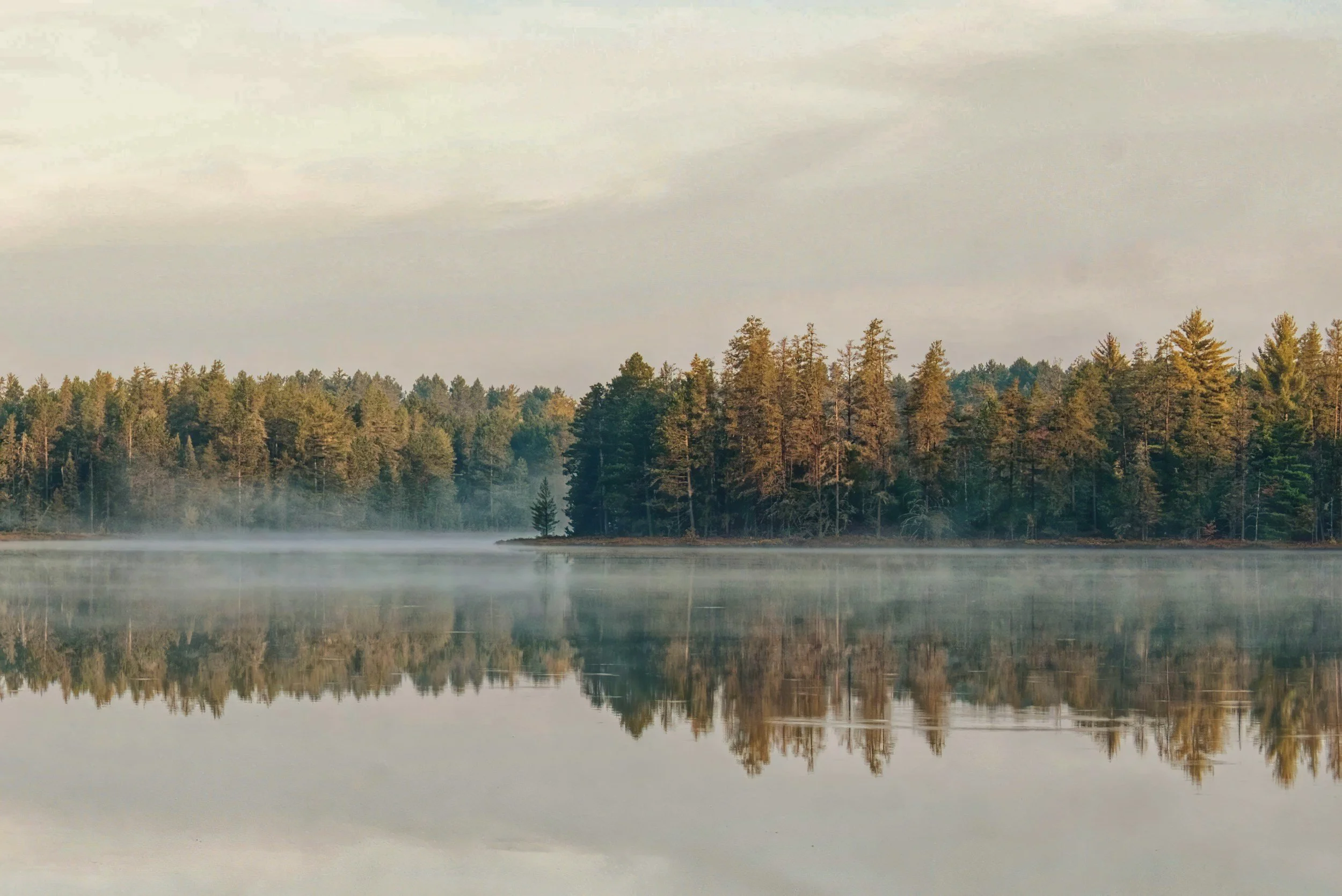
Located at 6952 Kauffman Road in Presque Isle, Michigan, on the shores of Lake Esau and Lake Huron, Camp Chickagami has a story of transformation and resurrection.
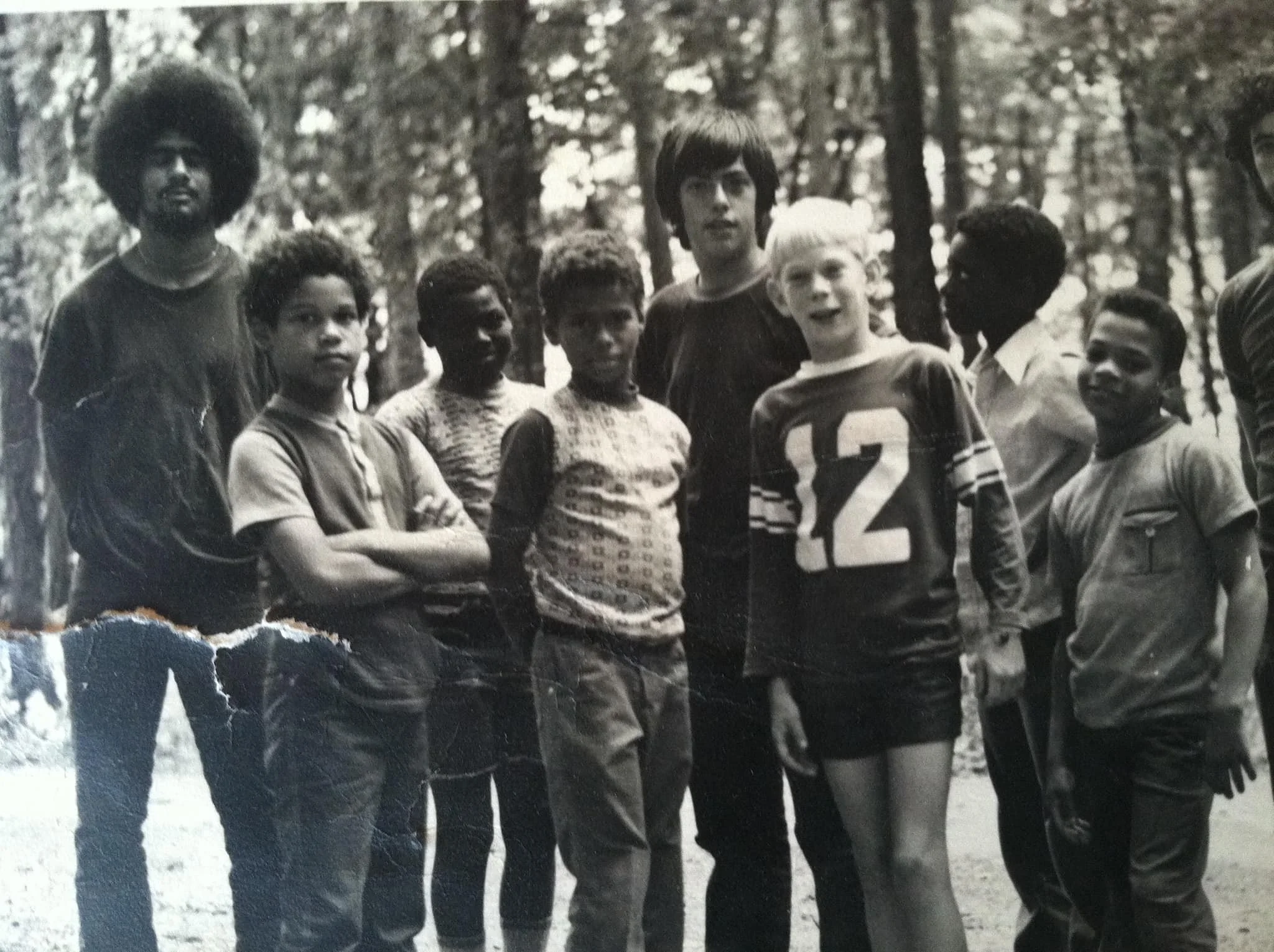
The Founding: In 1928, the Fletcher family—who had made their fortune in lumber—approached the Episcopal Diocese of Michigan with an extraordinary offer: land that would make a perfect boys' camp. The Diocese accepted, and in 1929, Camp Chickagami opened with its first camping sessions that were run using tents. For over 50 years, from 1929 through 1980, Camp Chickagami served as a diocesan boys' camp under the Diocese of Michigan, offering summer camp sessions, family camps, church camps, and retreats.
The Transition: In 1980, the Diocese of Michigan made a strategic decision to consolidate its camping programs. They closed both Camp Chickagami (the boys' camp in Presque Isle) and renamed Camp Holiday, their girls’ camp, to be Camp Gordonwood, a new co-ed camping program. (Camp Gordonwood would later close in the early 2000s, and the Gordonwood property was eventually developed for other uses.)
The Wilderness Years: For two decades—from the 1980s through the early 2000s—Camp Chickagami sat largely unused, though families, churches, and other groups occasionally rented the facility for their own programming. Resilient volunteers cared for and tended the property throughout this time, with hope for its future.
The Revitalization: In the early 1990s, the Episcopal Diocese of Eastern Michigan was formed (a split from the Episcopal Diocese of Michigan), and with the restructuring also came re-allocation of properties, including this Presque Isle gem. In the early 2000s, the Diocese of Eastern Michigan (now part of the Diocese of the Great Lakes) recognized the treasure that lay dormant in Presque Isle. A dedicated group of people brought Camp Chickagami back to life with vision and determination. Diocesan youth camping resumed as a co-ed program with just one week of summer programming. That single week grew to two weeks, then four, then six, and now stands at the summer-long list of diverse programming per summer for youth, families, and adults.
Ownership & Leadership: Camp Chickagami was owned by the Diocese of Michigan from its founding in 1929 until approximately 1993, when the Diocese of Eastern Michigan was formed and ownership transferred to that diocese. With the recent formation of the Diocese of the Great Lakes in October 2024, Camp Chickagami is now owned and operated by the Diocese of the Great Lakes.
Throughout its nearly 100-year history, Camp Chickagami has been served by dedicated directors and leaders who stewarded the facility and programs with care and vision. During the boys' camp era (1929-1980), documented directors included Bob Ouellette, Tom Grove, Lee Alden, and Dave Carlson, along with several other early leaders whose names remain part of our institutional memory but are not fully documented.
During the wilderness years (1980s-early 2000s), the facility was primarily rented to other groups. When the Diocese of Eastern Michigan began revitalizing the camp in the early 2000s, the Rev. Thomas Smith and Brian Ouellette provided leadership during the revitalization period. In recent years, McKenzie Bade-Knill has served as Executive Director. During McKenzie's parental leave in 2024, the camp was supported by co-directors Kay Leclaire, Sierra Gore, and Evan Knill, who stepped into leadership roles to ensure continuity and care for the camp community.
Today: For nearly a century, Camp Chickagami has remained a constant presence in the lives of Michigan's young people and families. It continues to serve as a "thin space"—a place where the boundary between heaven and earth feels particularly close—where young people discover who they are, build lifelong friendships, and encounter the divine in creation, community, and faith.
In recent years, the Diocese of Michigan has recommitted to investing in and partnering with our programs, strengthening Camp Chickagami's ministry, and expanding our reach. Additionally, partnerships like our work with Crossover Outreach in Flint have brought new campers into our community—young people who might not otherwise have access to this transformative experience.
Camp Chickagami remains a diocesan-owned facility and an essential hub for our camping ministry. It hosts a large portion of our youth overnight programs, all of our day camps, adult retreats, and intergenerational offerings. Its legacy endures in every cabin, every waterfront lesson, every meal shared. This camp carries the vision of the Fletcher family, the steadfastness of decades of Episcopal ministers and volunteers, and the hope of everyone who believes in the transformative power of community gathered in nature and faith.
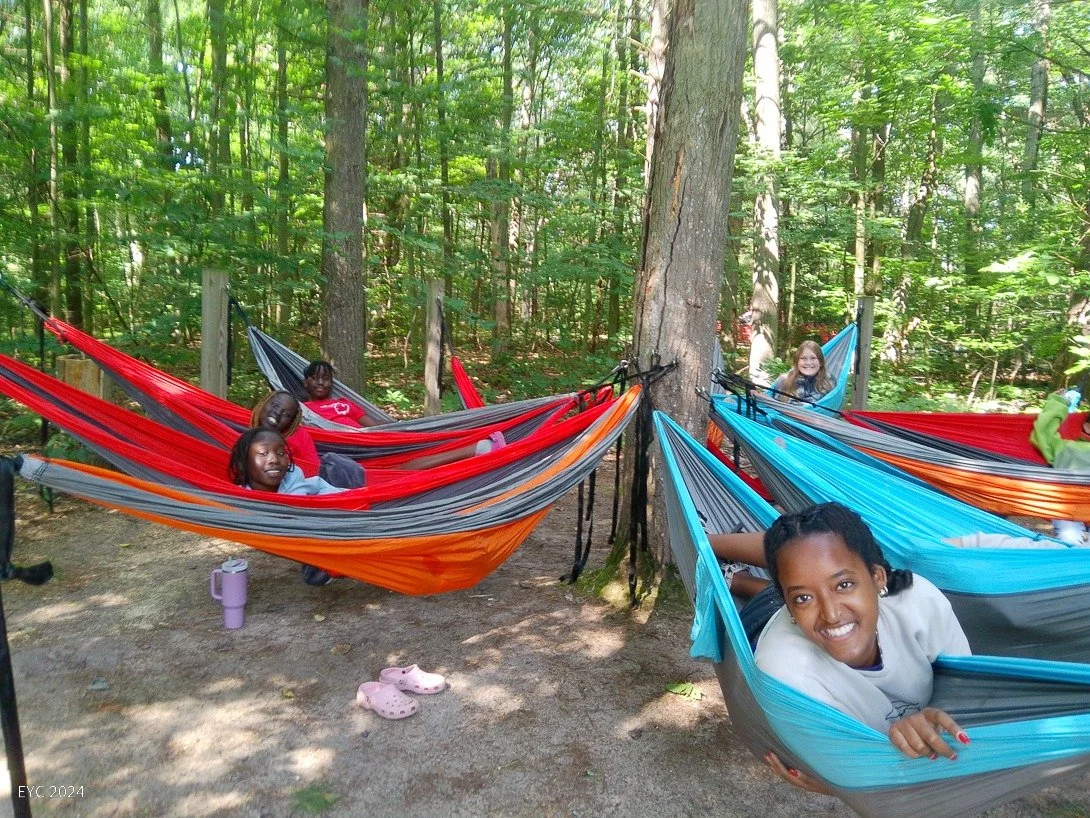
Episcopal Youth Camp (EYC)
-
The Episcopal Diocese of Western Michigan has offered camping experiences since the late 1950s through Episcopal Youth Camp (EYC). Through its long history, EYC has become a beloved diocesan institution that generations of young people in the Diocese of Western Michigan have called their "second home."
Like many camp programs, EYC has undergone transitions in its history, including a period when it was not in operation. Nearly 20 years ago, when Gennie Callard was brought on to the Diocese of Western Michigan’s staff, the program was revived and reimagined for the time and place. Under her leadership, the program was restarted, and the foundation, culture, and practices that shape EYC today were established.
When Gennie Callard transitioned from her role as director, Bill Fleener, Jr., Yvonne Fleener, and Eryn Fleener stepped up to lead. Since 2021, they have stewarded the program with dedication. While the names of EYC's directors prior to Gennie are not fully documented at this time, we honor all those who have served in leadership and stewardship of this program across its 60+ year history.
Throughout its history, EYC has been unique in renting properties across Michigan rather than owning a permanent facility. This approach has enabled the program to adapt and relocate while maintaining its core mission and values. EYC's early years saw the program held in various locations, including Clear Lake in Beulah, Michigan, where campers like Bill Fleener, Jr. attended in 1973.
Like Camp Chickagami, EYC created a space where lives changed—where campers discovered resilience, built confidence, and learned that they are loved and accepted exactly as they are. Over the decades, it moved to different facilities while maintaining its core mission: to build deeper relationships between campers and with God in a loving, inclusive community where all are welcome.
Coming together.
Honoring legacies & building something strongWhen the Diocese of the Great Lakes formed in October 2024, we faced a beautiful question: How do we honor these two distinct legacies while creating something unified and strong?
The answer isn't to erase what came before. It's to bring them together intentionally and thoughtfully. We're not merging Camp Chickagami and EYC. We're creating a framework for our programming—Great Lakes Episcopal Camping & Retreats—that allows both legacies to thrive while strengthening the whole.
Camp Chickagami remains a diocesan-owned asset that is available for personal rental and retreat, in addition to the Great Lakes Episcopal Camping & Retreats programs that will be held there.
-
Camp Chickagami's 95 years of ministry matter. EYC's 50+ years of ministry matter. The Fleener family's dedication matters. The Ouellette family's legacy matters. Gennie Callard's vision matters.
We carry all of this forward.
-
We're removing barriers to camp through transportation partnerships.
We're creating programs for all ages and stages.
We're building a brave space where every young person knows they belong.
We're investing in our staff and counselors because they're the heart of what we do.
-
As we come together as one diocese under one camping umbrella, we're listening — to each other, to our campers and families, and to what the Spirit is calling us toward.
Our camp programs are strong and thriving, and we're also being thoughtful and prayerful about what God is inviting us to become.
This October 2026 (God willing and the people consenting), we will elect our first Bishop Diocesan, and that moment will be part of how we discern together the future of camping and formation ministry across our entire diocese.
-
We're thinking creatively about how to reach more families, how to deepen our spiritual formation, how to steward our natural spaces, and how to sustain this ministry for the next generation of campers and their children after them.
We're not done discovering what's possible.
Thin Places.
where heaven & earth meet.
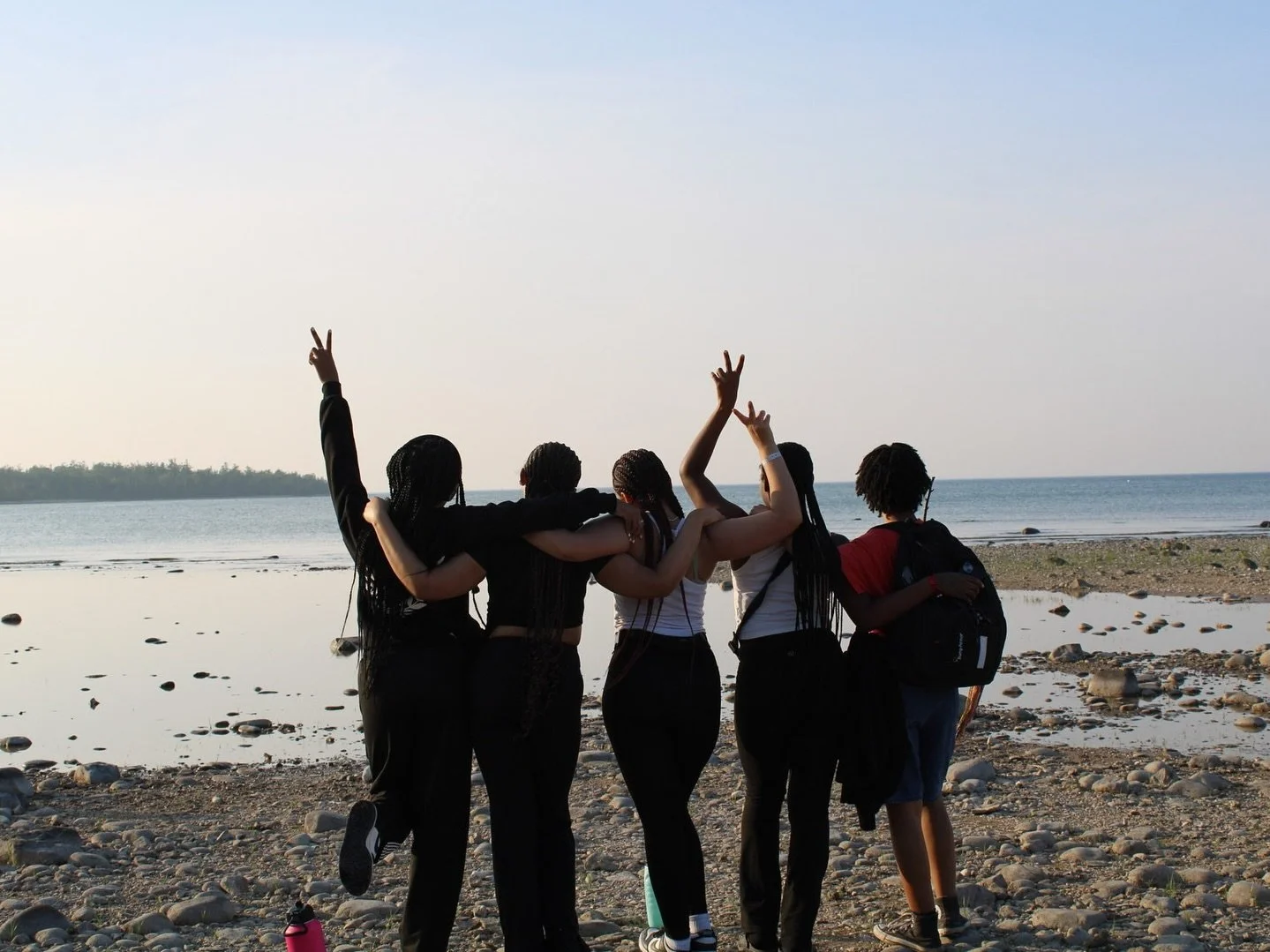
At the heart of our vision is a simple but profound idea: camp is a thin place—a place where the boundary between heaven and earth feels particularly close. It's where young people encounter the divine through nature, genuine community, vulnerability, and growth. It's where they experience being fully accepted and celebrated for who they are.
Whether it's at the shore of Lake Esau at Camp Chickagami's or in the middle of a field game at Stony Lake, we cultivate spaces where God's grace is tangible and real. Our role is to tend these thin places—to create environments where spiritual transformation can happen, where friendships deepen, where young people discover their own strength and worth.
How We’re Organized Now, and the Plan for Summer 2026
To honor both legacies while moving forward together, our camping ministry is organized with intentional leadership:
McKenzie Bade-Knill serves as Director of Formation and Camping for the Diocese of the Great Lakes, overseeing the vision and health of the entire camping ministry. She also continues to serve as the Executive Director of Camp Chickagami, ensuring the ongoing care of the nearly 100-acre facility.
We are also excited to welcome Reilly McNamara as our new Manager for Camping Ministries, who works directly with McKenzie and supports our Co-Directors as our camping ministry continues to grow and evolve. Reilly is a part-time, year-round member of our diocesan staff.
Our Co-Directors for Programming are seasonal positions designed to represent both of our camp legacies:
Elly Knaggs serves as Co-Director for Programming (representing both the Camp Chickagami Legacy and EYC as legacies). Elly grew up as a camper at Episcopal Youth Camp (EYC), has volunteered to lead Christian Formation at EYC, and has served as a counselor and, most recently, as program director at Camp Chickagami.
We are actively seeking another Co-Director for Programming (to represent our EYC Legacy) to join our leadership team this summer. This is a meaningful opportunity to shape the future of camping ministry in the Diocese of the Great Lakes. Apply on our Work at Camp page or email your Cover Letter and Resume to camping@greatlakesepiscopal.org to apply. We hope to fill this position by the end of April 2026.
All staff—counselors, program specialists, volunteers, and leaders—are part of Great Lakes Episcopal Camping & Retreats. This unified structure promotes clear communication, shared values, consistent quality, and the strength that comes from being part of something bigger.
Our leadership team can be reached any time by email at camping@greatlakesepiscopal.org.
Where We'll Be This Summer (2026)
Our camping ministry happens in multiple locations across the Diocese of the Great Lakes:
Camp Chickagami in Presque Isle remains our primary hub, hosting the majority of our overnight youth camp sessions, day camps, and our beloved adult retreats and family gatherings.
Stony Lake Camp in New Era will host one week of our summer programming (we partner with this facility for the week).
On the Road at Congregations: We're also bringing camp programming directly to congregations around the Diocese through auxiliary programming and traveling day camps. Camp isn't just about lakefront locations—it's about creating thin places and building community wherever young people gather.